
Views: 0 Author: Site Editor Publish Time: 2026-01-12 Origin: Site


1. Material Selection for Sheet Metal Parts
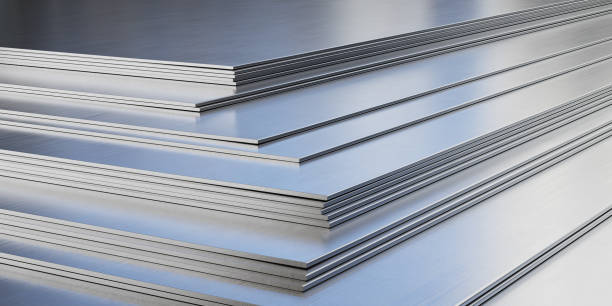
Sheet metal is among the most commonly used materials in the structural design of communication products. Understanding the comprehensive properties of materials and selecting them correctly has a significant impact on product cost, performance, quality, and manufacturability.
Principles for Sheet Metal Material Selection:
Utilize common metal materials and reduce material specifications/varieties, keeping them within the scope of the company's material handbook as much as possible.
Minimize the variety of materials and sheet thickness specifications within the same product.
Under the premise of ensuring part functionality, prioritize cost-effective materials and reduce material consumption to lower overall material costs.
For chassis and large enclosures, consider reducing the overall weight of the unit as much as possible.
In addition to ensuring the functionality of the parts, the Mold manufacturer also needs to consider that the stamping performance of the materials should meet the processing requirements to ensure the rationality and quality of the product processing.
2. Introduction to Several Commonly Used Sheet Metals
(1) Cold-Rolled Steel Sheet (CRS)
Cold-rolled steel sheet refers to cold-rolled sheets made from carbon structural steel. It is produced by further cold-rolling hot-rolled carbon structural steel strip to a thickness of less than 4mm. Rolled at room temperature, it does not develop iron oxide scale, resulting in excellent surface quality and high dimensional accuracy. When combined with annealing treatment, its mechanical and processing properties surpass those of hot-rolled sheets. Common grades include low-carbon steels 08F and 10#, which offer good blanking and bending performance.

(2) Continuous Electrolytic Galvanized Cold-Rolled Steel Sheet (EG)
Commonly known as an "electrolytic plate," this sheet undergoes a process where zinc is continuously deposited from a zinc salt solution onto a prepared steel strip under an electric field. Due to process limitations, the zinc coating is relatively thin.
(3) Continuous Hot-Dip Galvanized Steel Sheet (GI)
Often called galvanized sheet or "tinplate," this refers to cold-rolled continuous hot-dip galvanized sheets and strips with thicknesses ranging from 0.25 to 2.5mm. The strip first passes through a flame-heated preheating furnace to burn off residual oils and form an iron oxide film. It then enters a reduction annealing furnace with an H₂/N₂ atmosphere, heated to 710–920°C, reducing the oxide film to sponge iron. The activated and cleaned strip is cooled to just above the zinc melting point before entering a zinc bath at 450–460°C, where an air knife controls the coating thickness. Finally, it undergoes chromate passivation to improve resistance to white rust. Compared to EG sheets, GI has a thicker coating and is primarily used for parts requiring stronger corrosion resistance.
(4) Aluzinc-Coated Steel Sheet (GL)
The Al-Zn alloy coating consists of 55% aluminum, 43.4% zinc, and 1.6% silicon, cured at 600°C to form a dense quaternary crystalline protective layer. It offers excellent corrosion resistance, with a normal service life of up to 25 years—3–6 times longer than GI and comparable to stainless steel. Its corrosion resistance comes from aluminum's barrier protection and zinc's sacrificial protection. While zinc sacrificially protects cut edges, scratches, and coating damages, aluminum forms an insoluble oxide layer, providing barrier protection.
The sheets described in 2), 3), and 4) are collectively known as coated steels and are widely used in domestic communication equipment. Parts made from coated steels often require no further plating or painting, and cut edges need no special treatment, though special phosphating can enhance edge corrosion resistance. From a cost perspective, using EG sheets eliminates the need for parts to be sent out for plating, saving time and transportation costs. Additionally, parts require no pickling before painting, improving processing efficiency.
(5) Stainless Steel Sheet (SUS)
Widely used for its strong corrosion resistance, good electrical conductivity, and high strength, its disadvantages must be fully considered: high material cost (approximately 4 times that of standard GI); high strength increases tool wear on CNC punching machines, often making it unsuitable for such processing; clinch nuts for stainless steel require special high-strength stainless steel types, which are expensive; clinch nut riveting is often insufficient, frequently requiring additional spot welding; paint adhesion is challenging to control; and significant material springback makes it difficult to maintain shape and dimensional accuracy in bending and stamping.
(6)Aluminum and Aluminum Alloy Sheets
Commonly used aluminum and aluminum alloy sheets mainly include the following three materials: corrosion-resistant aluminum 3A21 (formerly LF21), corrosion-resistant aluminum 5A02 (formerly LF2), and hard aluminum 2A06 (formerly LY6).
Corrosion-Resistant Aluminum 3A21 (LF21): An Al-Mn alloy, it is the most widely used corrosion-resistant aluminum. This alloy has low strength (only higher than industrial pure aluminum) and cannot be strengthened by heat treatment. Cold working is often used to improve its mechanical properties. It exhibits high plasticity in the annealed state and acceptable plasticity in the semi-hardened state, but low plasticity when fully work-hardened. It offers good corrosion resistance and weldability.
Corrosion-Resistant Aluminum 5A02 (LF2): An Al-Mg corrosion-resistant aluminum. Compared to 3A21, 5A02 has higher strength, particularly fatigue strength, along with high plasticity and corrosion resistance. It cannot be strengthened by heat treatment. Weldability is good with contact and hydrogen atomic welding, but there is a tendency for hot cracking with argon arc welding. Machinability is better in the cold-worked and semi-hardened states but poor in the annealed state. It can be polished.
Hard Aluminum 2A06 (LY6): A common hard aluminum grade. Hard and super-hard aluminum grades have higher strength and hardness than standard aluminum alloys and can be used for panel-like parts. However, their plasticity is poor; they cannot be bent, as this causes cracks or fractures at the outer radius.
The designation and temper codes for aluminum alloys have been updated under new Chinese standards (GB/T 16474-1996 for designation and GB/T 16475-1996 for temper).
A cross-reference table between old and new codes is shown in Table 1-1.

(7)Copper and Copper Alloy Sheets
Commonly used copper and copper alloy sheets primarily include two types: Red Copper (Pure Copper) T2 and Brass H62.
Red Copper T2: This is the most commonly used pure copper, with a distinctive purple appearance, hence the name "red copper" or "purple copper." It offers high electrical and thermal conductivity, excellent corrosion resistance, and good formability. However, its strength and hardness are significantly lower than those of brass, and it is considerably more expensive. It is primarily used for conductive, heat-dissipating components and corrosion-resistant parts in durable consumer goods, typically for parts in power supplies that need to carry high currents.
Brass H62: A high-zinc brass, it possesses relatively high strength and excellent cold/hot workability, making it suitable for various forming and machining processes. It is mainly used for load-bearing parts requiring deep drawing or bending. While its electrical conductivity is inferior to that of red copper, it offers better strength and hardness at a more moderate cost. Where conductivity requirements permit, selecting Brass H62 over red copper can significantly reduce material costs. For example, in busbars, the conductive strips are predominantly made from Brass H62, which has proven fully adequate for the application.
3. Influence of Material on Sheet Metal Processing
The three primary sheet metal processes are Blanking, Bending, and Drawing. Different processes impose different requirements on the sheet material, so material selection should consider the product's general geometry and intended manufacturing methods.
Material Impact on Blanking Process
Blanking requires the sheet material to have sufficient plasticity to prevent cracking during the operation.
Soft materials (e.g., pure aluminum, corrosion-resistant aluminum, brass, red copper, low-carbon steel) exhibit good blanking performance, resulting in smooth edges with minimal burr or roll-over.
Hard materials (e.g., high-carbon steel, stainless steel, hard aluminum, super-hard aluminum) produce poorer blanking quality, with rougher fracture zones, especially pronounced in thicker sheets.
Brittle materials are prone to tearing during blanking, particularly with narrow features, where cracking is likely.
Through analysis of stamping processes, parameter adjustment, and optimization of mold components, we can substantially reduce mold trial cycles. This delivers maximum value and enhanced market competitiveness for our clients.

