
Views: 0 Author: Site Editor Publish Time: 2026-02-13 Origin: Site


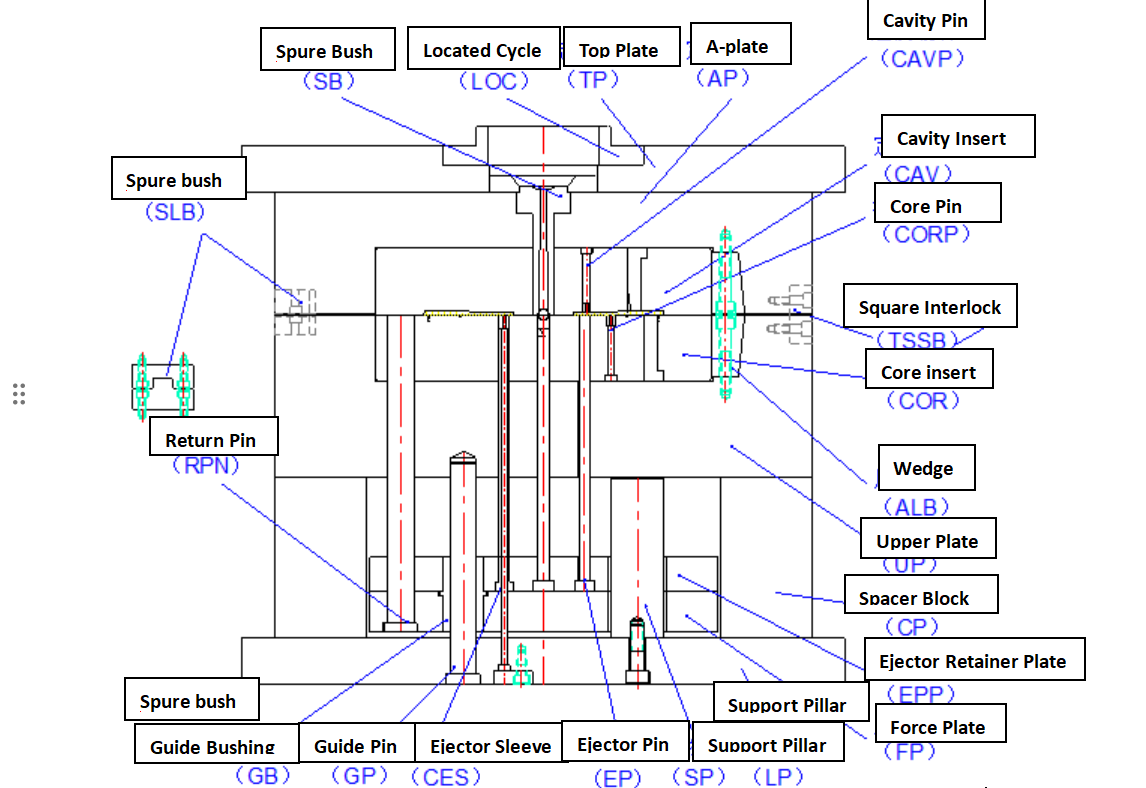
The basic structure of an injection mold consists of two main parts: the stationary mold half and the movable mold half. The stationary half is mounted on the stationary platen of the injection molding machine, while the movable half is mounted on the moving platen.
During the injection molding process, the movable mold half, driven hydraulically and guided by guide pins, closes with the stationary half. The molten plastic is then injected from the machine nozzle through the mold’s runner system into the cavity. After the plastic cools and solidifies, the mold opens—i.e., the stationary and movable halves separate. Typically, the molded part remains on the movable half, and the ejection mechanism pushes it out of the mold.
1. Molding Components
Molding components refer to the parts in the fixed and movable mold halves that form the cavity. They typically consist of a punch, cavity die, inserts, and other elements. When the mold is closed, they form the cavity for filling with molten plastic and determine the shape and dimensions of the molded part.
2. Gating System
The gating system is the channel through which molten plastic flows from the injection molding machine nozzle into the mold cavity. It consists of the main runner, sub-runners, gate, and cold slug well.
3. Guide Mechanisms
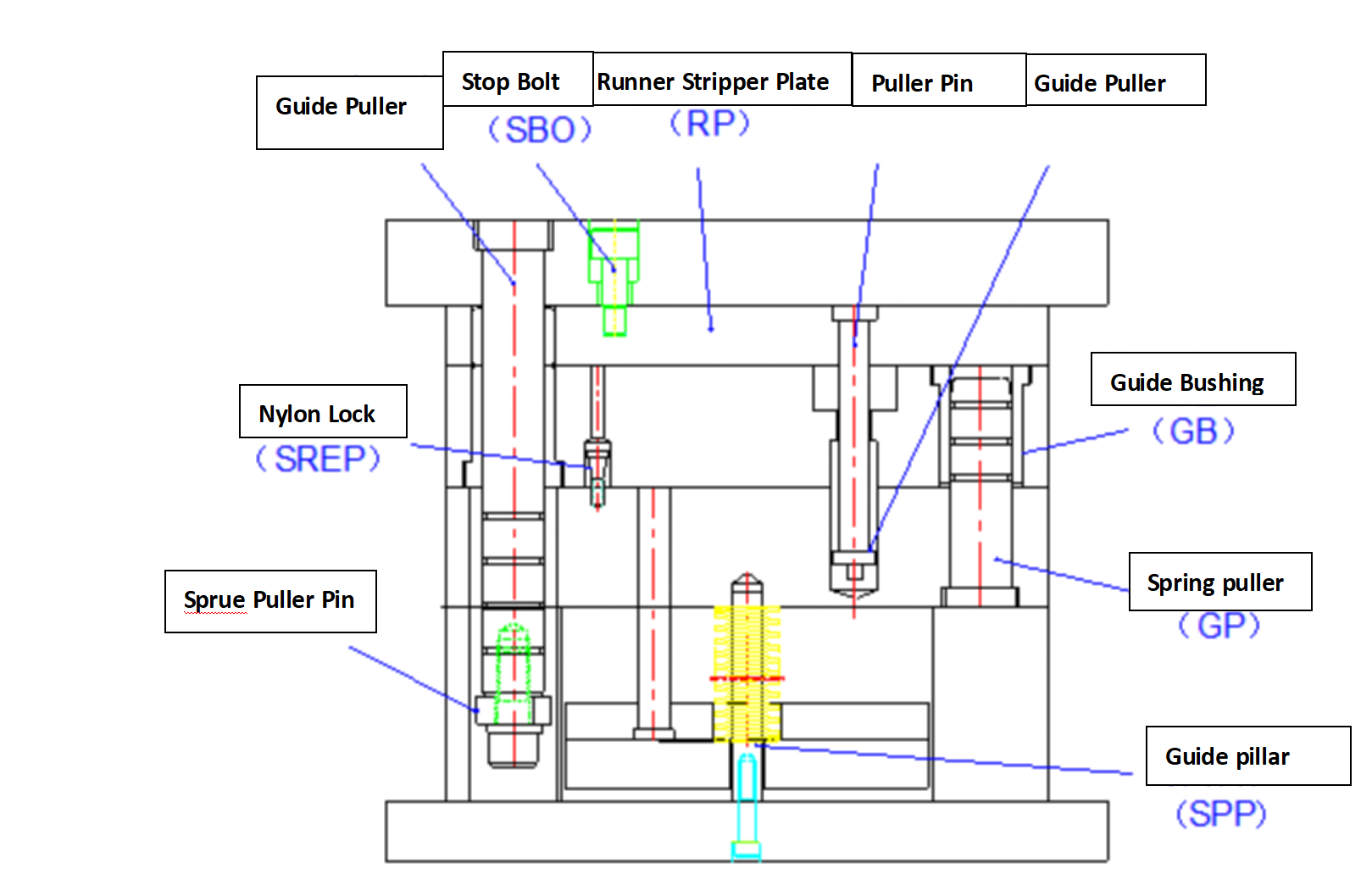
Guide mechanisms are divided into two categories: the guiding structure between the movable and fixed mold halves, and the ejection mechanism. The former ensures the accurate alignment of the movable and fixed mold halves during clamping, to guarantee the precision of the plastic part's shape and dimensions. The latter is designed to prevent the ejector plate from skewing during ejection.
4. Ejection Mechanism
The ejection mechanism, also known as the demolding mechanism, is the device used to eject the plastic part from the mold during mold opening. It comes in many structural forms, with common types including pin ejection, plate ejection, and sleeve ejection mechanisms.
5. Lateral Parting and Core-Pulling Mechanism
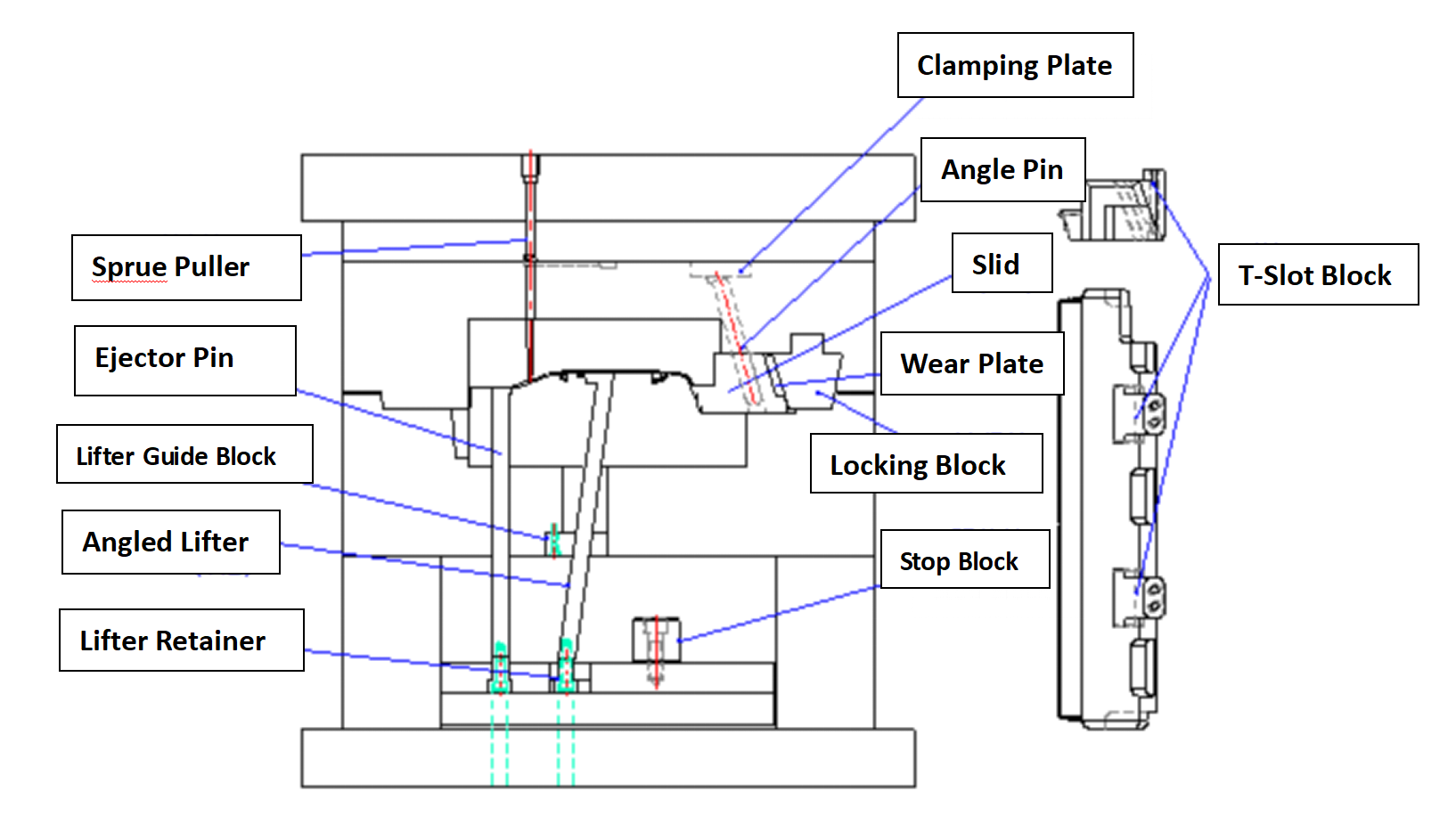
When a plastic part has lateral holes, undercuts, or protrusions, lateral cores or inserts are required for molding. Before ejecting the plastic part during mold opening, these lateral cores or inserts must be retracted or pulled away from the plastic part to allow smooth demolding.
6. Heating or Cooling System
To meet the temperature requirements of the injection molding process, it is necessary to control the mold temperature. Therefore, molds are often equipped with a cooling system, and heating elements are installed inside or around the mold. The cooling system typically consists of cooling channels drilled within the mold.
7. Venting System
During the injection molding process, it is often necessary to provide a venting system to expel the air from the mold cavity. This is usually achieved by intentionally creating several grooves on the parting surface, or by utilizing the clearance between ejector pins or cores and the mold plates for venting. For small plastic parts, the volume of air to be vented is minimal, so venting can be directly achieved through the parting surface without the need for additional vents.
